A Simple Daily Routine to Start Supporting Your Body (Without Overhauling Your Life)
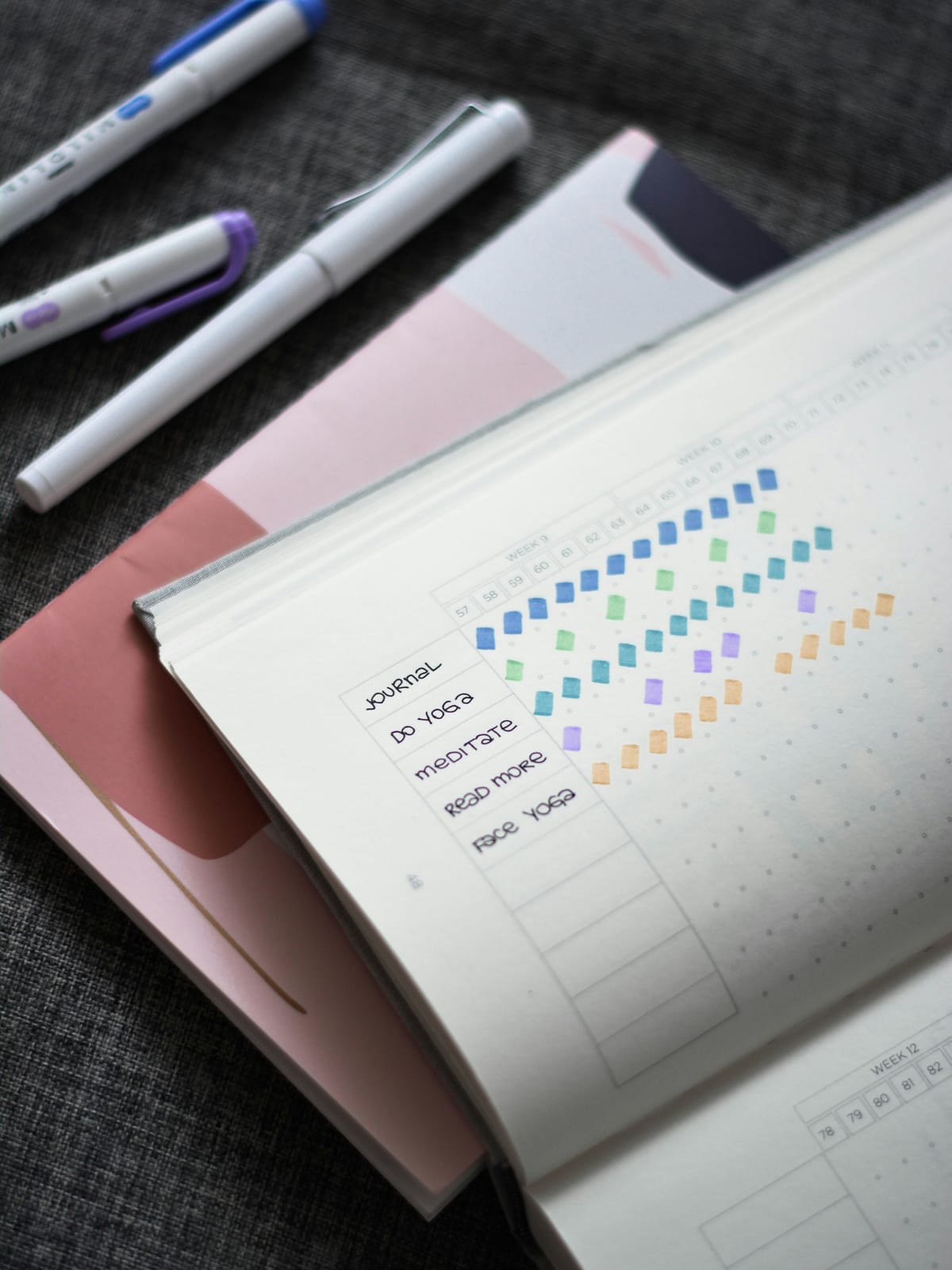
Can I tell you what I hear more than almost anything else when women talk about trying to take better care of themselves?
"I just don't know where to start."
Or sometimes it sounds like this: "I do really well for a few days, and then everything falls apart and I'm back to square one."
Or this: "I know what I should be doing. I just can't seem to actually do it consistently."
If any of that sounds familiar, I want you to know — there is nothing wrong with your willpower or your discipline or your desire to feel better. What's often missing is not motivation. It's structure. Not the rigid, colour-coded, alarm-at-5am kind of structure. Just a few gentle anchors in the day that your body can begin to count on.
That's what this post is about. A simple, real-life daily routine built around two things: a morning that sets you up, and an evening that winds you down. A handful of small, accessible habits that don't require a personality transplant or an extra three hours in your day.
This is not a perfect routine. It's not optimised or biohacked or designed to make you a high performer. It's designed to make you feel like a human being who is being taken care of — and that human being is you, taking care of yourself.
Let's build it together.
First, a word about why routines actually work
Before we get into the specifics, I want to share something that I think makes routines feel less like a chore and more like a gift.
Your body runs on rhythms. It has done since long before alarm clocks or calendars existed. Your circadian rhythm — the internal 24-hour clock that governs sleep, waking, hunger, digestion, hormone release, immune function, and dozens of other processes — is exquisitely sensitive to cues. Light and darkness. Eating times. Movement. Temperature. The patterns of your day.
When your days are consistent — when your body knows roughly what's coming — it can prepare. It starts releasing cortisol before you wake so you're ready to move. It begins winding down melatonin production in response to dimming light. It primes digestion before a meal it's expecting. Your nervous system, when it can predict the shape of the day, feels genuinely safer. And a nervous system that feels safe is one that can rest deeply, digest properly, regulate emotions, and heal.
Routines are not about rigidity. They're about giving your body a rhythm it can trust.
And the beautiful thing is — you don't need a perfect routine for this to work. You need a consistent one. Even a gentle one. Even an imperfect one that you mostly follow most of the time.
That's what we're building.
The morning anchor: How you begin shapes how you continue
The morning doesn't need to be long. It doesn't need to be elaborate. What it needs to be is intentional — a handful of moments where you are doing something for yourself before the day starts doing things to you.
Here's the thing about mornings: the first 30–60 minutes after you wake up are disproportionately influential on how the rest of the day unfolds. Your cortisol is naturally at its highest point right after waking — this is normal and healthy, and it's what gives you alertness and energy in the morning. What you do with that window either builds on that foundation or quietly undermines it before the day has even really started.
Reaching for your phone immediately — scrolling news, checking emails, opening social media — means your nervous system encounters stress, comparison, and demand before it's had a single moment to orient itself. Many women describe this as immediately feeling behind, or anxious, or vaguely unsettled, without quite knowing why. This is often why.
So the morning routine I want to share with you is really about reclaiming that window. Making it yours, before it belongs to anyone else.
Step 1: Water before anything else (2 minutes)
Before coffee, before your phone, before anything — drink a full glass of water.
You've been without it for seven or eight hours. Your brain is approximately 75% water and is mildly dehydrated by morning. That mild dehydration affects focus, mood, and energy in ways that are easy to mistake for needing more sleep or more caffeine.
This is the smallest possible habit. It costs you nothing except the 30 seconds it takes to pour a glass of water before bed so it's already waiting for you in the morning. And yet it's the one that, once people start doing it consistently, they notice almost immediately.
If you want to add a squeeze of lemon, or drink it warm, lovely. But that's a flourish. The water itself is the habit.
Step 2: Light before screens (5–10 minutes)
After your water, before you open your phone, step outside. Or stand at a window if outside isn't possible. Let your eyes have natural light — even for just five minutes, even on a grey cloudy morning, even in winter.
Natural morning light is one of the most powerful tools for circadian rhythm regulation that exists — and almost nobody uses it deliberately. It sets your body clock for the entire day. It signals the suppression of melatonin so you feel awake and alert. And crucially, it sets the timer on when your body will start producing melatonin again that evening, which is what makes you feel naturally sleepy at the right time.
If you can take your water outside with you, you've just done the first two steps simultaneously. Five minutes on your porch or in your garden in the morning, glass of water in hand, no phone in sight — that is a morning routine. That alone is doing something genuinely meaningful for your body.
Step 3: Move your body before you sit down (5–10 minutes)
You don't need a workout. You need movement — the kind that tells your body it's awake and the day has begun.
This could be five minutes of gentle stretching on your bedroom floor before you even get dressed. It could be a short walk around the block after you drop the kids at school. It could be ten minutes of yoga from YouTube while your coffee brews. It could be putting on one song and letting your body move however it wants to.
The goal here is simply to interrupt the pattern of going from lying down to sitting at a desk or on a sofa for the next several hours. Your lymphatic system — which is part of your immune function and has no pump of its own — relies entirely on movement to circulate. Your blood sugar regulation is meaningfully improved by movement in the morning. And the mood-lifting effects of even gentle morning movement tend to carry through the first few hours of the day in a way that's hard to replicate with caffeine alone.
This is not your workout. This is not exercise you need to track or be proud of. This is just your body waking up.
Step 4: Something nourishing before you rush (10–15 minutes)
Breakfast, eaten sitting down, without your phone, before the chaos takes over.
I know that might sound like a luxury. But here's what skipping breakfast or eating it standing over the sink while answering emails actually does: it keeps your cortisol elevated, it starts your blood sugar on a rollercoaster, and it sends your body the subtle message that there is no time for its needs today. That message compounds over time.
You don't need a beautiful, Instagrammable breakfast. You need protein, something that satisfies you, and the experience of sitting down to eat it. Eggs and toast eaten at the kitchen table in ten minutes is a nourishing breakfast. Greek yogurt with some fruit is a nourishing breakfast. Last night's leftovers reheated are a nourishing breakfast.
The sitting-down part matters almost as much as what you eat. When you eat in a relaxed state, your digestive system is in parasympathetic mode — rest and digest — which means you actually absorb more of the nutrients in your food. When you eat in a rushed or stressed state, your digestion is partially suppressed. Your body is, quite literally, in a better position to receive nourishment when you're calm.
Step 5: One minute of intention (1–2 minutes)
Before you pick up your phone and the day begins in earnest, take one minute. Just one.
You could use it to take three slow, deep breaths. You could think of one thing you're genuinely looking forward to today — something small and real, not aspirational. You could set a soft intention: today I want to feel calm or today I want to notice when I need a break. You could write two or three sentences in a journal. You could simply sit quietly with your coffee for 60 seconds before the noise begins.
This is the most flexible part of the morning because it's the most personal. What matters is that there is a moment — even a very small one — where you are present with yourself before you become present for everyone else.
That pause, practiced daily, becomes something you start to genuinely look forward to. And over time it becomes the thing that, on the mornings you miss it, you actually notice and miss.
What the morning routine looks like all together
When you line it up, this is genuinely achievable in 20–30 minutes:
- Wake up → glass of water immediately
- Step outside for 5–10 minutes of natural light (bring your water)
- 5–10 minutes of gentle movement — stretch, walk, dance, whatever feels good
- Sit down for breakfast — protein-based, phone-free, 10–15 minutes
- One minute of intention — breathe, journal, simply be quiet
That's it. That's the whole morning. On harder days, even just the water and the light outside are enough to count. You don't have to do it perfectly. You just have to keep coming back to it.
The midday reset: A small pause that changes the afternoon
I want to add this in because I think it's underrated, and because I know that for many women, the afternoon is where everything quietly unravels.
You've been going since morning. Your cortisol, which peaked early, is naturally starting to drop. Your focus is softer. You might be reaching for sugar or caffeine to push through. You're probably also carrying whatever has accumulated emotionally and mentally throughout the morning — the difficult email, the tense interaction, the mental load of everything that didn't get done.
A midday reset doesn't need to be long. Five minutes, done with intention, can genuinely shift the second half of your day.
The midday reset: 5 minutes
Step away from your screen. Physically get up and move away from whatever you're working on or whatever surface you've been sitting at. Even just walking to the kitchen and back gives your eyes and your nervous system a brief break.
Drink a glass of water. Most of us are mildly dehydrated by midday and don't notice because we're too busy to register thirst. The afternoon energy slump and brain fog that so many women experience around 2–3pm is very often partly dehydration, not just a natural energy dip.
Take five slow breaths. Not a full breathwork practice — just five deliberate, slow, deep breaths. Inhale through your nose for four counts, exhale through your mouth for six. The longer exhale activates your parasympathetic nervous system and gently turns down the cortisol response that's been running all morning. Two minutes, maximum.
Do a quick body check. This sounds more complicated than it is. Simply ask yourself: how am I actually feeling right now? Not how you think you should be feeling, not a performance for anyone — just a genuine, curious check-in. Tired? Tense? Hungry? Overwhelmed? You don't have to fix whatever you notice. You just have to notice it, because noticing is the first step toward responding to yourself with care rather than just pushing through.
If you can add a short walk outside at lunch — even ten minutes — even better. The combination of natural light, movement, and a break from screens in the middle of the day has genuinely impressive effects on afternoon energy, mood, and focus. But the five-minute reset is the minimum, and the minimum is enough.
The evening anchor: How you close the day matters as much as how you open it
If the morning routine is about giving yourself a foundation, the evening routine is about giving yourself permission to actually land. To stop. To come home to yourself after a day of being pulled in every direction.
Most of us don't really end the day. We just gradually slow down until we fall asleep — often with a phone in our hand, half-watching something, mentally still running through the list of things we didn't get to. We wonder why sleep is shallow or why we wake at 3am with a racing mind. Often it's because we never really gave ourselves permission to finish.
The evening routine is that permission. It is a sequence of gentle signals that say: the day is done. You can put it down now. It is safe to rest.
Step 1: A clear stopping point (5 minutes)
Decide on a time — whatever works for your real life — that is roughly when the active part of your day ends. Not when you fall asleep, but when you stop doing and start being.
Mark it in some way that feels meaningful to you. Change into comfortable clothes. Make a cup of herbal tea. Light a candle. Tidy the kitchen counter and close the laptop. The specific ritual doesn't matter — what matters is that it signals a transition. Your nervous system is beautifully responsive to these signals. When you do the same thing consistently at the same time, your body begins to anticipate what comes next and starts to downregulate accordingly.
Think of it the way you'd put a small child to bed — with consistency, gentleness, and a reliable sequence that tells them it's safe to let go. You deserve that same care.
Step 2: A phone-free window (20–30 minutes minimum)
I want to be honest with you here rather than just telling you to put your phone down without explaining why.
Your phone — specifically the content on it — keeps your nervous system activated in a very particular way. Social media triggers social comparison and the stress response that comes with it. News creates low-grade anxiety and a sense of unresolved threat. Even lovely content — home inspiration, wellness accounts, people doing interesting things — keeps your brain in a state of processing and stimulation when what it needs, in order to prepare for sleep, is a gradual dimming of input.
Blue light from screens suppresses melatonin production, which delays sleep onset. But the content itself is often more disruptive than the light — you can get blue light glasses and still lie awake because you spent an hour reading things that activated your stress response right before bed.
A 30-minute phone-free window before sleep is one of the most impactful things you can do for sleep quality. What you do in that window is up to you — reading a physical book, gentle stretching, a warm bath or shower, a slow conversation with someone you love, sitting quietly, doing something creative with your hands. Whatever feels genuinely restful to you.
If 30 minutes feels impossible right now, start with 15. Or 10. The direction matters more than the distance.
Step 3: A gentle body practice (5–10 minutes)
Your body carries the day. It carries the tension from the difficult conversation, the hunching over a screen, the emotional weight of everything you held for other people. Before you sleep, it deserves a few minutes of being attended to — not for performance, not to get fit, just to be released.
This could be five minutes of gentle stretching or yoga — there are countless short, free evening routines on YouTube that feel less like exercise and more like unwinding. It could be a slow walk around the block if you haven't moved much in the afternoon. It could be lying on the floor with your legs up the wall — a deeply calming posture that drains fluid from the legs, activates the parasympathetic nervous system, and costs you nothing but five minutes of stillness.
A warm bath or shower in the evening does double duty here: it relaxes tense muscles and supports sleep onset. When you step out of warm water, your core body temperature drops, which mimics the temperature drop your body needs to initiate deep sleep. If you struggle to fall asleep, a warm shower 60–90 minutes before bed is worth trying before anything else.
Step 4: Something that empties the mind (5–10 minutes)
This is the step most people skip, and it's often the most needed.
Your mind, by evening, has been running all day. It has been problem-solving and planning and worrying and responding and remembering. If you don't give it somewhere to put everything before you sleep, it will try to process it while you're lying in bed in the dark — which is when the 3am spiral tends to begin.
A few minutes of writing before bed is one of the most effective ways to quiet a busy mind. It doesn't need to be journaling in any formal sense. It can simply be a brain dump — everything that's on your mind, written down quickly, without editing or trying to make it meaningful. The act of writing something down tells your brain it can stop holding it. It's been recorded. It's safe to let it go.
You could also write three small things from the day that you're grateful for — not in a forced, performative way, but genuinely: three things, however small, that were good. Research on gratitude journaling is consistent: it trains your brain toward positive awareness over time, improves sleep quality, and reduces the ruminative thinking that tends to keep us up at night. Even one sentence counts.
If writing isn't your thing, five minutes of quiet breathing with your eyes closed serves a similar function. The 4-7-8 breath — inhale for 4 counts, hold for 7, exhale for 8 — is particularly effective for calming an active mind and can become a lovely, reliable sleep signal when practiced consistently.
Step 5: To bed at a consistent time (and away from your phone)
The last piece of the evening is simply this: a consistent bedtime, or thereabouts — and your phone charging somewhere other than your bedroom.
We've talked about consistent wake times in our sleep post, but a roughly consistent bedtime supports the same circadian anchoring. It doesn't have to be exact. A window — say, between 10 and 10:30pm — is enough for your body to start expecting it.
And the phone. I know. I know it's where you read, and scroll, and listen to podcasts, and decompress. But having it in the bedroom means that even when you're not actively using it, part of your brain knows it's there. One notification. One thought of something you need to check. One "just five minutes." The bedroom, as much as possible, benefits from being a space your brain associates only with sleep and rest — not with information and tasks and the outside world.
A small alarm clock costs very little and solves the "but I need it as my alarm" problem entirely.
What the evening routine looks like all together
- Chosen stopping time → transition ritual (change clothes, make tea, close the laptop)
- Phone away for at least 30 minutes before sleep
- 5–10 minutes of gentle body release — stretch, bath, legs up the wall
- 5–10 minutes of mind emptying — brain dump, gratitude, breathing
- Consistent bedtime → phone charging outside the bedroom
The whole thing, at its most minimal, can be done in 20 minutes. At its fullest and most nourishing, it might take 45. Both are fine. Both are infinitely better than nothing.
When life interrupts — because it will
I want to say this clearly and with a lot of warmth: there will be mornings when none of this happens. There will be evenings where you fall asleep on the sofa at 9pm with your phone in your hand and a half-eaten cracker on the coffee table.
That is not failure. That is Tuesday.
The goal is not to execute this routine perfectly every single day. The goal is to have something to come back to. A shape for the day that your body recognises and finds comforting, even when it only partially happens, even when it's a Tuesday of a week that's felt like a month.
What I'd encourage you to think about is this: what is the absolute minimum version of this routine that you can always come back to, no matter what? For the morning, maybe it's just the glass of water and five minutes outside. For the evening, maybe it's just the phone in another room and three slow breaths before you close your eyes.
Find your floor — the version so small it's almost impossible to skip — and let that be enough on the hard days. Everything else is a bonus.
The returning is the practice. Every time you come back, you are doing the thing. Not the perfect version of the thing — the real version of it. And real, imperfect, consistent care is the most powerful kind there is.